







From a canon’s monastery to a tourist magnet
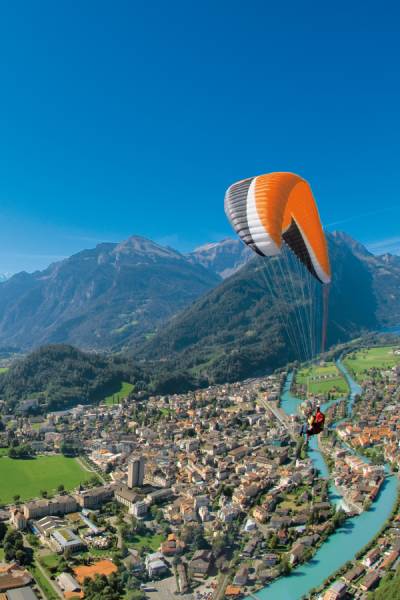
People have lived in and around Interlaken for at least 900 years. In contrast to today, however, the population back then consisted almost exclusively of farming families and their servants. How did the rural “Bödeli”, as the locals call it, turn into the world-famous tourist hotspot Interlaken?
From regional…
Thanks to its location between two lakes, the Bödeli offers very fertile soil for agriculture. This was already recognised by an Augustinian monastery, which was first mentioned in 1133. What began as a solitary monastery grew into a small settlement, then a proud village, and finally the bustling Interlaken of today.
The region first came to national attention through the Unspunnen Alpine Herdsmen Festival. Originally started in 1805 as a way of reconciling town and country, the event has attracted large numbers of visitors ever since, although it is only held sporadically. In the early 19th century, growing interest led to an increase in the number of inns licensed to receive guests.
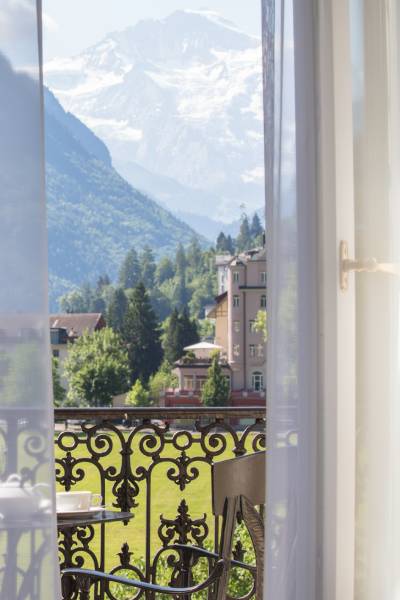
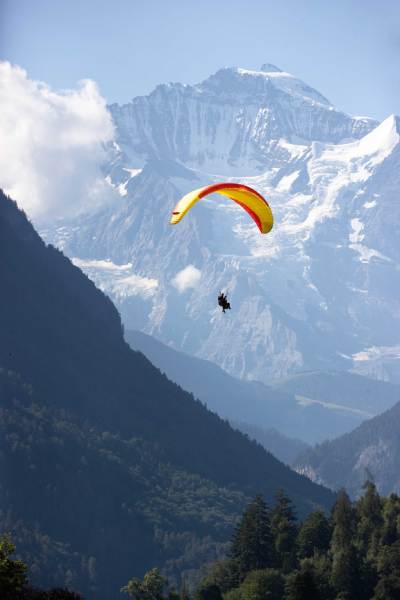
Soon after, a majestic natural landmark came into focus: the now world-famous Jungfrau. The brothers Johann Rudolf and Hieronymus Meyer, coming from the canton of Aargau, attempted to climb it in 1811, on 1st August- Switzerland’s national day. They set off from the Lötschberg valley and reached the summit two days later. In the early years, few believed that they had actually succeeded. Nevertheless, this first ascent of a Swiss peak over 4,000 metres marked the beginning of tourism in the Bernese Oberland.
… to international
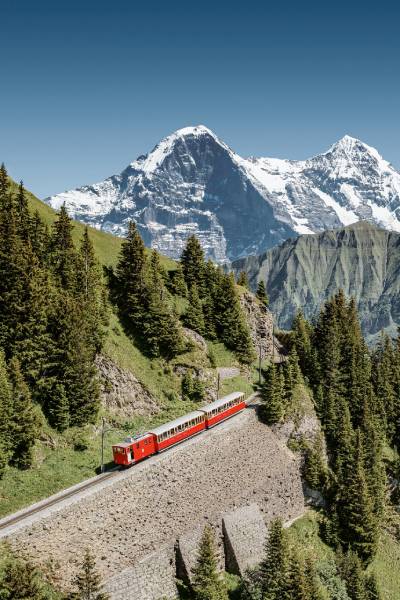
Another milestone in Interlaken’s rise as a tourist destination was the introduction of steamboat travel: on Lake Thun in 1835 and on Lake Brienz in 1839. Half a century later, mountain railways followed in Lauterbrunnen and Grindelwald. Finally, in 1912 – almost exactly 100 years after the first ascent of the Jungfrau – the Jungfrau Railway was opened.
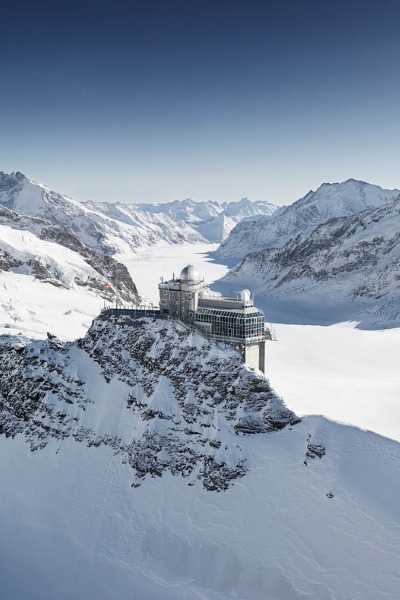
While the Meyer brothers could only spend about 30 minutes at the summit, today’s visitors enjoy a much more comfortable experience. Europe’s highest railway station welcomes over a million guests a year, captivating them with its eternally white glacier scenery.